Take the faster path to growth. Get Smith.ai today.
Affordable plans for every budget.


Caller ID blocking prevents your phone number from appearing on the recipient's screen. The quickest method is dialing *67 before any call. For permanent blocking, your phone's settings or a VoIP dashboard can hide your number on every outbound call.
Who it's for: Mobile users, business owners, and remote workers who want to keep their personal number private when calling from a cell phone, landline, or VoIP system.
As a business owner, you may find yourself having to return calls on the go, sometimes using your personal phone, which may not be ideal for a new lead, an existing client, or someone you are not familiar with. Protecting your privacy internally and externally can be the difference between chaos and keeping things professional, which we all know can be a fine line.
Caller ID blocking is any method that prevents your phone number from displaying on the recipient's caller ID screen, whether through a dialing code like *67, your phone's built-in settings, a dedicated app, or your VoIP account configuration.
In 1976, Shirley Ann Jackson conducted groundbreaking research into theoretical physics, which would later lead to the invention of the technology behind caller ID services in 1987. The Newark-based New Jersey Bell pioneered caller ID services and was the first company to release it to customers in 1988.
However, when caller ID was first introduced, people were not so excited about the idea of their personal information, such as their name and business, being displayed to the people they were calling. Politicians against caller ID initially accused the service of being an “invasion of privacy,” which prolonged efforts for each state to adopt it. California, the last state to adopt caller ID, didn’t do so until 1996, nearly 10 years after the service was created.
Phone companies that encouraged the use of caller ID argued that people had the right to know who was calling. Still, in an effort to compromise, caller ID blocking was offered in the early ‘90s. Blocking would allow people to block their information from being displayed on caller ID.
Then, *67 was born. When you dial this on your phone, it returns three small beeps and then gives the dial tone. Once you hear this tone, you dial the number you are calling, and you now have a blocked caller ID. This is the old-fashioned way, but it still works today. For another more old-fashioned option: if you are still on an old rotary phone, you may use this service by rolling “1-1-6-7.” But who is likely to really do that?
Now, with the digital age and mobile phones in everyone’s hands from pre-K to old age, there are many ways a person can block their number. Outside of the option of permanently making your number private, here are a couple of ways you can block your number from the other caller. If you are more concerned with your name than your number, you can dial *63, and only your number will show.
The digital age has opened the door for more than just unwanted callers. Now you have to worry about spam callers whose sole purpose is to gather your personal information and possibly use it. Furthermore, when you call a business or 1-800 number, they may collect your data and use it for other purposes without your knowledge or consent.
Spam calls are equal to the spam emails you get asking for your details so you can get $10 million sent to your bank account. Or spammers may ask you for personal information in order to receive free Amazon gift cards your IP address keeps winning. We've all received these calls which are annoying at best and dangerous at worst.
However, with this evolution of digital phone trolls, caller ID blocks have also evolved. Here are a couple of ways you can go beyond *67 and get rid of all the spam, telemarketing, and phishing you may be vulnerable to if you are making a lot of business calls. These are also options for people who just need to make a call to their new client, but do not want them having their personal cell phone number, as we mentioned before.
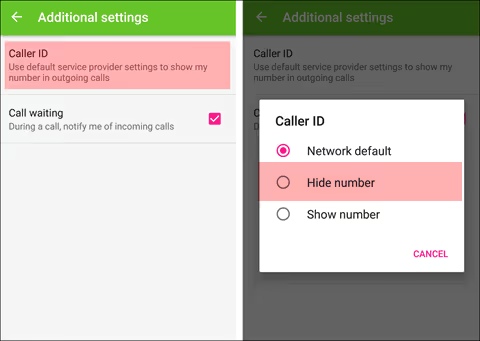
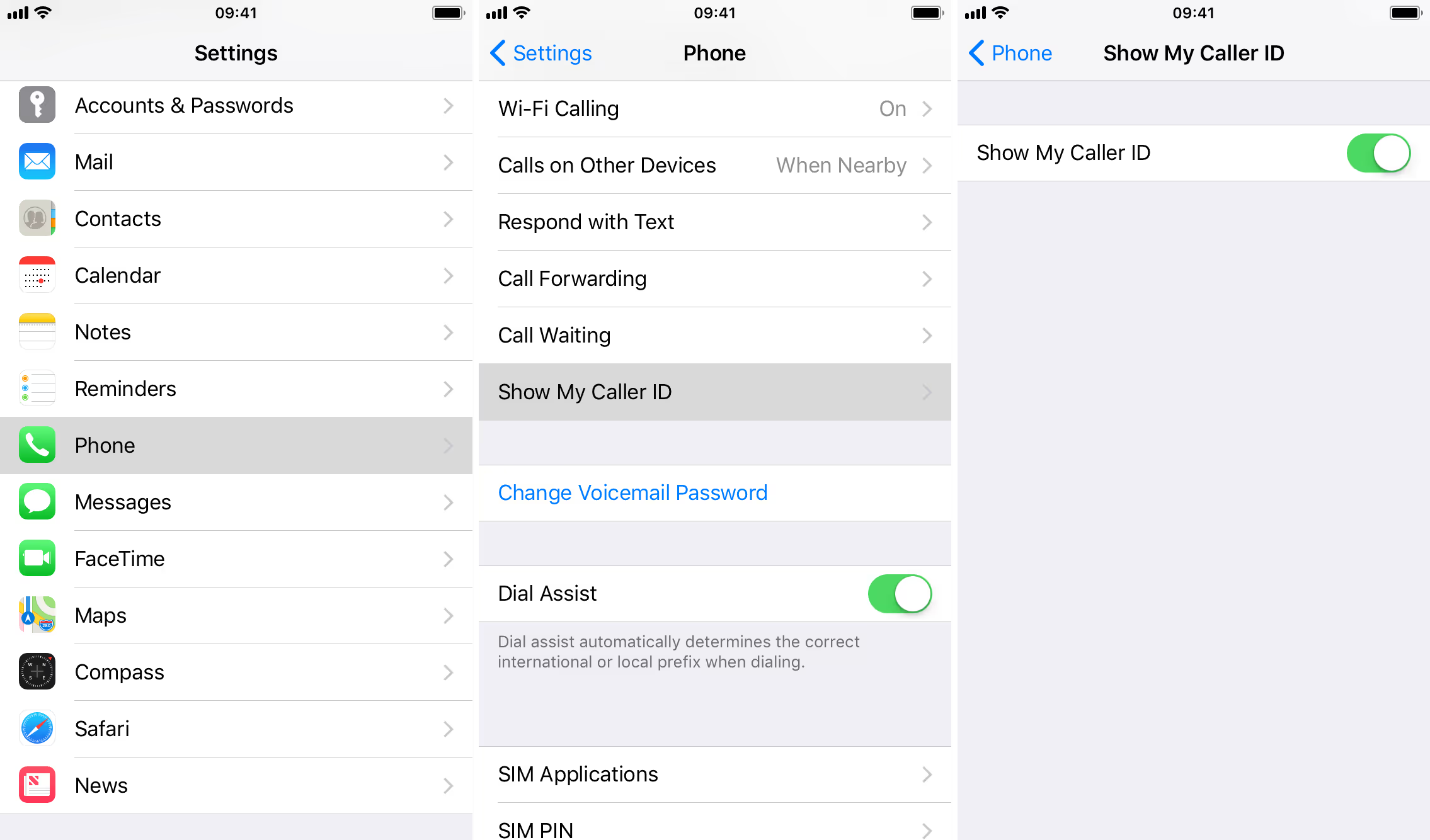
Both Android and iPhones offer built-in settings that allow you to change the status of your caller ID options. Be aware that some service providers may not allow this setting, which is why the applications we’ll get to later might come in handy.
How to start Android caller ID blocking:
Turning off your iPhone caller ID:
It is important to realize if you decide to block your number permanently in any way that some calls may not go through. You will typically receive a call warning that the caller does not take calls from private numbers. This is an easy fix with dialing *82, which temporarily unblocks your number for that call.
Also called burner apps, these use your internet or data network to create a second number that appears when you call. Even if a recipient tries to look up your number, they'll see the app-generated number instead of yours.
Burner apps are practical for common scenarios: selling products online, receiving job interview callbacks, or protecting your contact details after a first interaction. A few of the top-rated options:
All four are available on Android and iOS.
Here's an example of the setup for an anonymous Google Voice caller ID option:

If you use a VoIP phone service, you will need to login to the service website to block your caller ID from being displayed in outgoing calls. In general, you can follow these steps to do so:
To temporarily reveal your number for a specific call, dial *65 before the number to override the block. Managing call forwarding settings is often handled in the same area of your VoIP dashboard, so it's worth reviewing both while you're there.
Here's an example of the setup for 8x8 caller ID blocking option.

The steps for landlines vary by provider. Your best starting point is your service provider's website or the "Caller ID Block Outbound" section of your call settings. If that option isn't available in your dashboard, call customer service and request the setting be applied to your account.
For one-off calls, *67 works on landlines the same way it does on mobile. Dial it before the number, and your information stays hidden for that call.
Blocking your number for personal privacy is straightforward. For business calls, the tradeoff is different. Many prospects won't answer a call from an unknown or private number, and some phone systems are configured to reject them automatically.
If your number has been mislabeled, removing the spam label is a more effective fix than hiding your number entirely. Protecting your own number and stopping unwanted robocalls are related but separate problems, and solving one doesn't solve the other.
For most business owners, a dedicated outbound business number removes the tension completely: your personal number stays private by default, and every business call goes out under a professional identity.
Caller ID blocking is useful for personal privacy, but for business it creates a different problem. An unknown number calling a prospect reads as suspicious, not professional. The cleaner long-term solution is ensuring business calls go out from a dedicated number in the first place, so your personal phone never enters the picture.
Smith.ai AI Receptionist answers every call 24/7, capturing lead and client information the moment it matters, independent of whether your personal number is blocked or visible. For calls that need a human touch, the Virtual Receptionist service puts trained professionals on the line who handle your callers personally, screen new inquiries, and keep your front desk covered around the clock.
Book a free consultation to see how both serve your business.
Related reading:

Elizabeth Lockwood is the content marketing associate at Smith.ai. She focuses specifically on writing and editing engaging articles, blog posts, and other forms of publication.