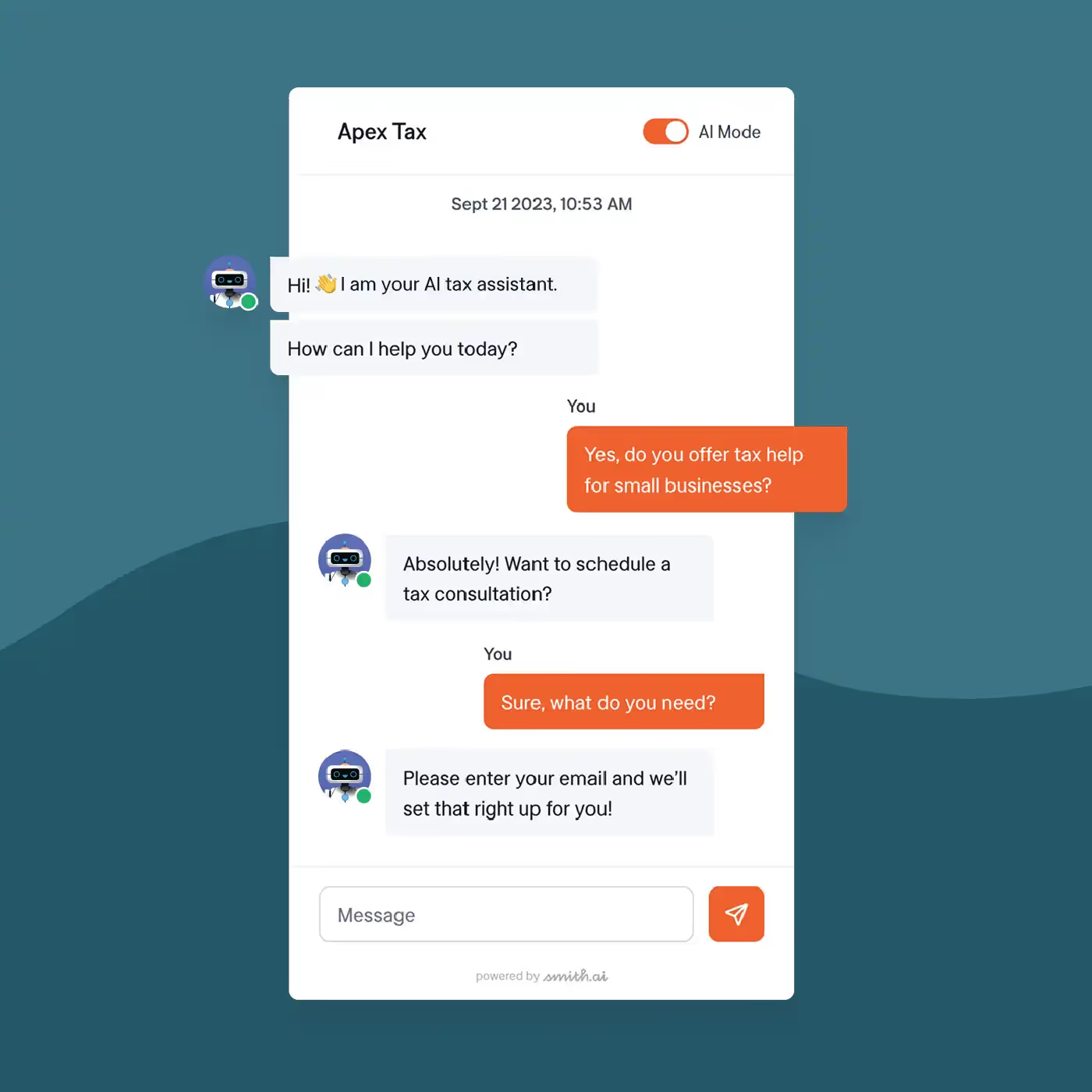
Take the faster path to growth. Get Smith.ai today.
Affordable plans for every budget.


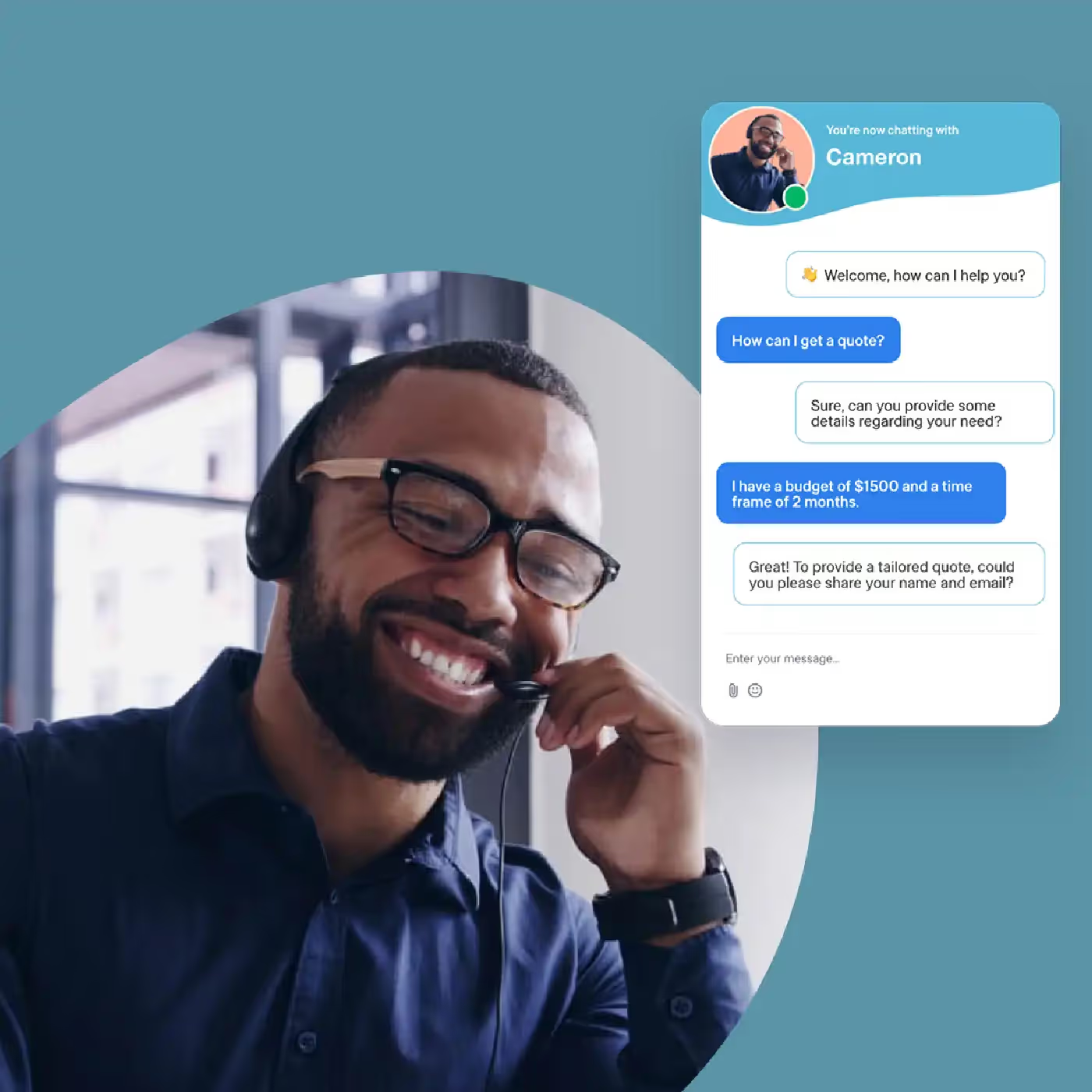
Appliance repair businesses lose revenue at the phone, not at the jobsite, considering that Twenty-seven percent of calls to home services businesses go unanswered, Every missed call is a commercial emergency or warranty job handed to the next competitor on the list — and whoever answers first almost always wins the work.
Routing every inbound call through a trained protocol is how repair shops stop the leak without pulling technicians off active jobs.
An appliance repair answering service handles emergency triage, structured intake and appointment scheduling around the clock, so technicians stay on the truck and every qualified caller reaches a person who can act.
This article covers what the service does, why it matters and what to look for when evaluating providers.
An appliance repair answering service is a specialized call-handling solution that manages inbound calls for residential and commercial appliance repair businesses.
Rather than routing to voicemail or interrupting a technician mid-repair, the service answers each call, captures appliance details and symptoms, triages emergencies against routine bookings and either schedules the job directly or hands the call off to the owner when specialist judgment is required.
The service combines structured intake (brand, model, age, warranty status, symptoms, error codes) with appliance-specific urgency rules (a freezer at 60 degrees routes differently than an ice maker that occasionally fails) and scheduling logic that accounts for real job durations rather than generic time slots.
Modern answering services also integrate with the CRM and dispatch software the business already runs, so calls flow directly into the work queue without manual re-entry.
Missed calls in appliance repair are not lost leads on a form. They are active emergencies routed to competitors who answered faster. A documented answering solution changes the economics of the phone line in five specific ways.
Commercial refrigeration failures, gas smell reports and sparking appliance calls are time-sensitive in a way residential booking requests are not. An answering service with appliance-specific protocols recognizes the difference on the first sentence of the call and routes urgent matters to immediate action, while lower-urgency calls book into the standard schedule. A technician focused on a repair does not have to make that triage call from inside a machine.
Every minute a senior technician spends fielding a call is a minute not billed to a job. For small shops without a dedicated office manager, the phone actively competes with revenue-generating work. An answering service removes that trade-off — calls get the professional handling they need, and the most expensive labor in the business stays on the truck.
A caller who describes "the washer is making a noise" gives a technician almost nothing to work with. A trained intake captures the brand, model, age, warranty status, specific symptom (sound during spin versus sound during fill), what the customer has already tried and any visible error codes. That lead qualification means the technician rolls with the right parts, diagnoses faster and closes more jobs on the first visit.
Appliance emergencies do not respect business hours. Refrigerators fail on Sunday afternoons and ovens quit on Thanksgiving morning. A documented after-hours call flow covers those windows at a fraction of the cost of staffing an in-house receptionist, which means the weekend commercial call that would have gone to voicemail becomes a Monday job instead of a competitor's revenue.
When calls are handled manually between jobs, notes get lost, callbacks get forgotten and CRM records fall out of date. An answering service logs every call — caller details, appliance information, symptoms, outcome — directly into the dispatch system through CRM integration, creating a clean operational record the business can actually run reports against.
An answering service is not a single capability. It is a set of specialized call-handling functions, each addressing a different operational need. The sections below cover what each function does and how it affects day-to-day operations.
Appliance emergencies arrive in unpredictable order, and the answering service runs call triage on the first call. Automated answering handles the structured questions that sort urgency from routine: what appliance needs repair, what brand and model, what exactly is happening and how long it has been failing. A refrigerator not cooling with food actively spoiling gets emergency call priority. A dishwasher making an intermittent noise books into the next available slot.
Intake questions are structured for appliance-specific diagnosis. A "washer will not spin" call captures error codes, unusual sounds and any customer attempts at troubleshooting, because the same symptom can point to a sock in the pump or a transmission failure that costs hundreds of dollars in parts. The technician arrives with the likely parts already loaded, which closes more jobs on the first visit.
The intake also captures age of appliance, warranty status and previous repair history before dispatching a technician. That prevents the most frustrating appointment of the week: arriving at a 25-year-old unit where the right answer is replacement, not repair, and the customer was never going to authorize the diagnostic fee.
Some calls require judgment that a scripted intake cannot provide. A restaurant losing thousands of dollars in food inventory, a medical office with a vaccine refrigerator failing, a caller reporting a gas smell from a stove or sparking from the outlet behind a dryer — all of these need a trained human on the line, not a structured form.
North America-based live receptionist staff trained on appliance repair workflows handle commercial emergency calls, walk business owners through temperature documentation for insurance purposes and activate safety protocols immediately when a caller mentions gas, smoke or electrical hazards. Intake data transfers with the caller, so the customer does not repeat information when moving between touchpoints in the service.
Live receptionists are also the right touch for customers with complex warranty questions, property managers coordinating multi-unit schedules and referral partners who need specialized handling rather than a generic script.
Different callers need different handling. A commercial maintenance contract customer should not be running through the same qualifying questions as a first-time residential caller. An appliance retailer referring to warranty work needs a different intake flow than a property manager with a broken unit in a rental.
The answering service branches the call flow by caller type. Commercial contract customers are recognized and routed straight to priority scheduling.
Residential calls branch by appliance category: refrigerator issues trigger food-loss prevention questions, washer problems include water-on-floor checks and warranty repairs follow manufacturer-specific protocols.
Property managers with multiple units receive fleet pricing. Each caller category hears the right script for their situation.
Appliance repair scheduling is a puzzle of drive times and repair durations. A refrigerator compressor replacement is a three-hour job, not a thirty-minute slot.
An answering service that integrates with the dispatch system books against realistic durations, accounts for travel between stops and confirms expectations with the caller: arrival window, what to have ready, model number and access to the appliance. Integrated appointment scheduling also handles the confirmation reminders that reduce no-shows.
When a commercial emergency displaces a residential appointment, the service notifies the affected customer with a new window and explanation. That handling preserves the relationship with the bumped customer while still letting the business chase the higher-value emergency.
Appliance repair service areas are rarely monolingual. Spanish-speaking households calling about a "refrigerador" or "lavadora" need an intake that handles technical terminology correctly, not a language barrier that delays the repair.
Bilingual answering detects Spanish automatically and runs intake in-language, with technical terms translating accurately (compressor becomes compresor, door seal becomes sello de la puerta). AI Receptionist Spanish support ships with end-to-end coverage so callers do not have to navigate a "press 2 for Spanish" menu.
For complex warranty discussions or technical explanations that benefit from human judgment, bilingual live receptionists take the call. That coverage serves growing customer bases that competitors lose by defaulting to English-only intake.
An answering service that sits outside the operational stack creates more work than it removes. The answering service should integrate with the dispatch and CRM tools the business already runs.
Through Zapier, the service connects to ServiceTitan, Housecall Pro and other field service platforms, so calls become jobs with appliance details populated automatically.
The integration stack extends beyond dispatch. QuickBooks handles warranty billing workflows. Salesforce tracks commercial account relationships.
Slack surfaces emergency alerts to the team in real time. Google Calendar displays availability including drive-time estimates. HubSpot runs nurture sequences for maintenance contract leads. The common thread is that every tool writes back to the CRM, which becomes the single record of every call and job.
Thousands of calls produce patterns that are invisible when handled manually.
A "makes noise only when hot" call usually points to a fan motor. A "leaks only during spin" call points to a door seal. A "trips the breaker sometimes" call suggests a failing compressor.
The service logs individual caller notes that change how a technician approaches the job: an aggressive dog in the home, an elderly customer who needs help moving an appliance, a prior repair that did not resolve the issue.
Those notes prevent safety incidents, improve visit quality and generate the referrals that compound over time.
Appliance repair faces persistent disputes about what was recommended, what was quoted and what the customer agreed to. Call recording and searchable transcripts resolve those disputes definitively.
Transcripts are also searchable for operational patterns. Searching mentions of DIY repair attempts reveals which YouTube-led fixes are creating callbacks. Searching by appliance age surfaces the inflection points where repair stops making economic sense.
Linking recordings to the service history means that on a callback visit, the technician reviews the original symptom description before the drive, which prevents repeated misdiagnosis.
Technicians cannot answer phones while testing 240-volt circuits, handling refrigerants or diagnosing a control board.
An answering service picks up every call the business cannot answer directly — after-hours calls, calls that come in while a technician is mid-repair and calls that arrive during the daily paperwork window.
Smart filtering protects the technician's focus. A "no cold air in the meat cooler" call gets through immediately. A "thinking about new appliances" call books into a sales follow-up queue rather than interrupting a repair.
Maintenance contract customers reach the owner directly. Extended warranty sellers do not. The result is that small shops project the responsiveness of larger operations without the overhead of an in-house receptionist.
Not all answering services handle appliance repair well. Generic receptionist services can pick up a phone but cannot run appliance-specific intake, triage a commercial emergency or feed jobs into a dispatch system. The features below separate services built for appliance repair from generic call centers.
Emergencies do not arrive during business hours. The service should cover nights, weekends and holidays without a drop in quality or intake depth. More importantly, it should triage against appliance-specific urgency rules rather than treating every after-hours call as equivalent. A failing walk-in cooler is not the same call as a customer researching dishwasher options.
Every call should produce a standardized record: appliance type, brand, model, age, warranty status, specific symptom, error codes, what the customer has already tried and whether the appliance is accessible. Services that capture only "name, phone and reason for call" push the diagnostic work onto the technician at arrival, which reduces first-visit close rates.
Commercial calls — restaurants, medical offices, property managers, facilities — need different handling than residential requests. The service should recognize commercial accounts on inbound, skip basic qualifying questions and route to priority scheduling with urgency matching the business impact.
Manual re-entry of call data into the dispatch system is the fastest way to drop jobs. The answering service should integrate directly with ServiceTitan, Housecall Pro, Jobber or whichever field service platform the business runs, pushing call data into the correct fields automatically.
Service areas with significant Spanish-speaking populations need bilingual intake, not a callback handoff. The service should handle Spanish calls end-to-end, including technical terminology, without losing any detail that matters for dispatch.
Some calls — gas smell reports, commercial emergencies with insurance implications, complex warranty questions — benefit from a trained human on the line rather than a scripted intake. The service should include live receptionist coverage as a standard option for those situations, priced and scoped as a distinct service rather than treated as an add-on that kicks in only when automation stops working.
Every call should be logged, transcribed and searchable. The answering service should write results back to the CRM automatically, with recordings available for callbacks, disputes and training.
Appliance repair businesses that treat the phone as a first-class operational system capture more emergencies, keep technicians billable and build the customer records that compound into referral business. An appliance repair answering service is the infrastructure that makes that possible.
Smith.ai combines an AI Receptionist that answers instantly, runs structured appliance intake and pushes jobs into dispatch platforms, with a Virtual Receptionist team trained on home services workflows for commercial emergencies, bilingual calls and warranty conversations that benefit from human judgment.
Both options handle 24/7 coverage and write results back to the CRM. Schedule a consultation to see how the service fits an appliance repair operation

Maddy Martin is Smith.ai's SVP of Growth. Over the last 15 years, Maddy has built her expertise and reputation in small-business communications, lead conversion, email marketing, partnerships, and SEO.