Take the faster path to growth. Get Smith.ai today.
Affordable plans for every budget.



Contact centers scaling from 500 to 5,000+ monthly calls encounter a critical limitation in their escalation processes.
Traditional escalation protocols, where agents manually assess complexity and transfer calls, function adequately.
Agents expend cognitive resources determining which interactions require specialist intervention. Customers repeat information across multiple transfers. High-value opportunities queue alongside routine inquiries without differentiation.
Modern contact centers address this limitation through systematic automation that applies consistent logic to every escalation decision — an approach known as AI-powered call escalation.
This technology works by examining the architecture, trigger logic, and implementation framework that enable intelligent escalation decisions at high volume.
AI-powered call escalation is the automated process of routing calls from AI agents or initial support tiers to human specialists based on real-time analysis of conversation complexity, customer sentiment, business priority, and predefined escalation criteria.
Unlike traditional escalation, which relies on agent judgment and manual transfers, AI escalation uses natural language processing, sentiment analysis, and business rule engines to detect escalation triggers and automatically execute routing. Effective escalation requires comprehensive call flow design that maps decision points and routing pathways.
The system monitors every interaction in real-time, analyzing conversation content, customer emotion indicators, query complexity patterns, account value signals, and historical interaction data.
When specific thresholds are met (customer frustration, out-of-scope queries, or VIP status flags) the system triggers escalation protocols that route calls to appropriate specialists while preserving complete conversation context.
For operations managers scaling support teams, AI escalation provides systematic decision-making frameworks that maintain service quality regardless of call volume. The system generates analytics about escalation patterns, trigger accuracy, and specialist utilization rates.
Understanding AI-powered call escalation requires familiarity with the foundational components that enable automated routing decisions at scale.
Traditional escalation approaches create operational bottlenecks that worsen in proportion to call volume growth, ultimately limiting scaling capacity regardless of team size.
Automated escalation frameworks deliver measurable operational improvements across multiple dimensions, from efficiency metrics to customer experience outcomes and revenue optimization.
With these foundational concepts and benefits established, examining the technical architecture reveals how AI escalation systems execute intelligent routing decisions in practice.
Understanding AI escalation architecture requires examining the sequential stages that transform incoming calls into intelligent routing decisions. Each stage builds on the previous one, creating systems that combine speed and accuracy.
The escalation system monitors every AI-handled interaction from initial greeting through resolution or handoff. Natural language processing engines analyze conversation content — extracting key phrases, identifying topics, and categorizing query types.
Sentiment analysis algorithms track emotional indicators, such as tone patterns, word choice, and linguistic markers signaling frustration, confusion, or urgency.
The system also pulls contextual data in real-time: customer account status from CRM systems, interaction history from support platforms, and business rules from configuration databases.
This multi-source data collection happens continuously during the conversation, building comprehensive profiles of interactions as they unfold.
Collected data flows through escalation logic engines that evaluate against predefined trigger conditions.
Business rule triggers operate simultaneously:
Each trigger carries weighted priority values. VIP account flags combined with negative sentiment create higher escalation urgency than simple complexity indicators alone.
The system aggregates these weighted signals to determine whether escalation improves outcomes versus whether AI continuation serves customers better.
When escalation triggers activate, routing algorithms determine optimal destinations.
Priority-based routing ensures high-value escalations bypass standard queues. VIP customers experiencing billing issues are routed directly to senior account managers, while routine password resets escalate to tier-one support.
Skills-based matching examines the specific issue — technical product questions route to product specialists, billing disputes to finance team members, and cancellation threats to retention specialists.
This precise matching reduces secondary transfers and improves first-call resolution rates.
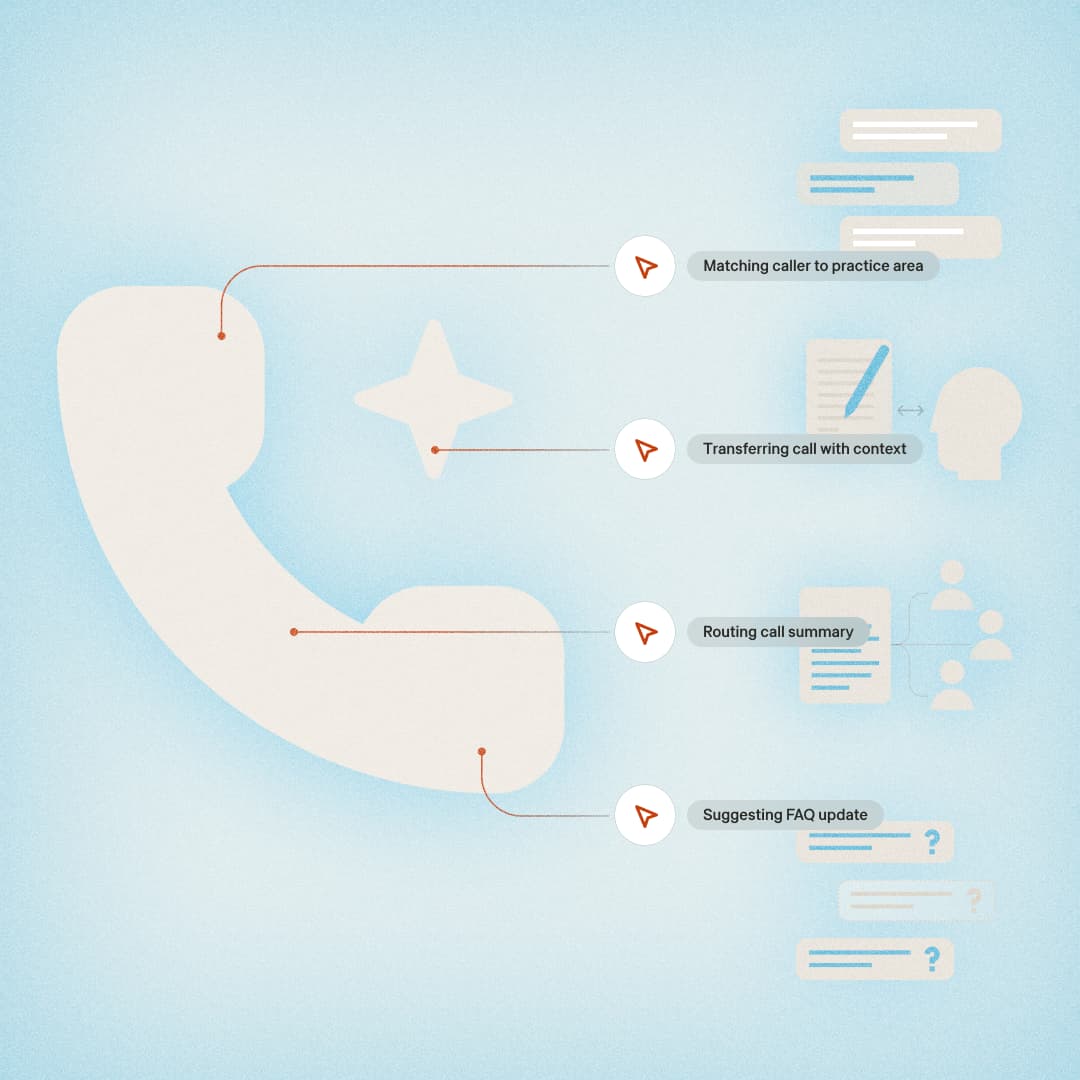
Before connecting customers, the system packages all collected information: complete conversation transcript, extracted key details, sentiment analysis results, customer account data, and identified issue summary.
This context package transfers to the specialist's interface, appearing before they join calls. The handoff itself follows configured protocols — some implementations inform customers of the transfer, while others execute silent handoffs in which specialists join seamlessly.
Throughout this workflow, the system logs decision points, trigger types, routing destinations, and timing metrics. These logs feed analytics engines that identify optimization opportunities and train machine learning models to improve future escalation accuracy.
Understanding the technical architecture provides the foundation for translating operational requirements into functional escalation workflows that address specific business challenges.
Effective escalation workflow design requires systematic analysis of current operations combined with clear prioritization of business objectives.
The following framework guides operations managers through implementation decisions that balance automation efficiency with customer experience quality.
Start by analyzing three months of historical escalation data to understand current performance:
Record actual calls to document the handoff experience. Listen specifically for moments when customers say "I already told the other person this" or "why am I being transferred again?" — these phrases signal context-preservation failures that automated systems can eliminate.
Interview specialists about unnecessary escalations. Technical support teams may report that 40% of escalated calls involve questions fully addressed in documentation — indicating opportunities for improved AI training rather than better routing.
This audit reveals the gap between current performance and desired outcomes, providing baseline metrics needed to measure improvement after implementation.
Translate audit findings into specific, measurable trigger conditions. Avoid vague criteria like "escalate complex issues."
Instead, define: "Escalate when AI attempts the same resolution approach twice without customer confirmation of understanding" or "Escalate when sentiment analysis indicates frustration scores above 7/10 for two consecutive AI responses."
Establish business rule triggers based on account value and strategic priorities. Define: "Accounts with >$100K annual contract value receive immediate specialist routing for billing, renewal, or feature discussions" or "Enterprise customers flagged as 'at risk' in CRM trigger retention specialist routing regardless of initial query type."
Configure customer-initiated triggers with appropriate guardrails. While providing "press 0 for agent" options, implement a brief qualification to prevent generic transfers and improve specialist utilization.
Design routing trees that reflect team structure and expertise distribution. If operations include geographic teams, configure ZIP code or area code routing before skill-based matching. If organized by product line, implement topic classification as the primary routing dimension.
Consider specialist availability and capacity constraints. Advanced systems implement load balancing that routes escalations to available specialists, even if they are not the optimal expertise match, preventing queue buildup during high-volume periods.
Configure fallback routing: if the primary specialist team queue exceeds 5 minutes, redirect to secondary qualified agents.
Establish clear escalation paths for different priority levels. VIP customer escalations might bypass all queues for immediate connection, while standard-complexity escalations enter skill-based queues with prioritization based on wait time.
Define which information transfers to specialists during handoff. Minimum context includes: a complete conversation transcript, a customer account summary, the identified issue classification, sentiment analysis results, and previous interaction history.
Extended context might include customer lifetime value, contract renewal date, open support tickets, and recent purchase history.
Configure specialist interface requirements so the escalation context is visible before accepting calls, enabling preparation and access to mental resources.
A well-designed interface surfaces the most critical information prominently — VIP status, expressed frustration, previous contact attempts — while making additional context available through expandable sections.
Establish handoff communication standards by scripting the transition moment: does AI announce the transfer, introduce the specialist by name, or execute silent handoffs?
Deploy escalation workflows in controlled phases rather than organization-wide launches. Begin with specific interaction types — implement AI escalation for billing inquiries first, measure results over 30 days, refine triggers based on outcomes, then expand to additional categories.
Monitor these key metrics weekly:
Conduct monthly reviews with specialists to gather qualitative feedback. Use A/B testing for trigger optimization. Treat escalation logic as continuously optimizable rather than a one-time configuration.
Escalation logic requires regular evaluation against actual outcomes, specialist feedback, and changing business priorities.
Most implementations fail not from poor trigger design, but from inadequate human backup when escalations occur. Starting this implementation requires examining current escalation challenges, defining clear success metrics, and selecting platforms that provide both intelligent automation and reliable human expertise for complex situations.
The AI Receptionist from Smith.ai combines automated escalation triggers with seamless handoffs to live agents, delivering the hybrid architecture operations managers need to scale without sacrificing service quality.

Maddy Martin is Smith.ai's SVP of Growth. Over the last 15 years, Maddy has built her expertise and reputation in small-business communications, lead conversion, email marketing, partnerships, and SEO.
.avif)
.avif)
.webp)


