Take the faster path to growth. Get Smith.ai today.
Affordable plans for every budget.



Most businesses capture customer conversations but analyze only a fraction of them. Manual call review typically covers only a small number of interactions, potentially leading to missed insights in unexamined recordings. This sampling approach leaves patterns and trends invisible that manual review cannot capture.
The operational challenge extends beyond limited coverage. Quality assurance (QA) teams currently spend hours manually scoring calls while managers lack the complete data needed to make strategic decisions about staffing, training or service improvements.
AI call intelligence systems address these analytical limitations through automated conversation analysis. The technology has matured, with multiple vendors now offering conversation intelligence solutions and organizations frequently reporting measurable returns on investment following deployment.
AI call intelligence systems are technology platforms that use artificial intelligence to manage, analyze and enhance telephone-based customer interactions in business environments.
Conversational intelligence platforms automate the evaluation and analysis of customer service calls to extract more insights from them, representing a significant shift from manual call review to AI-driven pattern recognition across your entire conversation history.
Seven interconnected components transform voice conversations into actionable business intelligence. Understanding each helps you evaluate vendors and identify which capabilities matter for your use case.
Automatic Speech Recognition (ASR) converts spoken words into text transcripts in real-time or after calls complete. It is the foundational layer — without accurate transcription, none of the downstream analysis is possible.
Natural language processing (NLP) analyzes transcribed text to extract meaning, identify customer intent and detect topics beyond simple keyword matching. This enables automated categorization of call reasons and extraction of structured business insights from unstructured conversation data.
Sentiment and emotion detection analyzes vocal tone, speech patterns and language to determine emotional states — frustrated, satisfied, confused or angry. It identifies at-risk customers before they explicitly complain and flags calls requiring immediate supervisor attention.
Real-time analytics processes conversations while they're happening, providing live coaching cues and compliance alerts during active calls. This shifts quality management from reactive — learning from mistakes days later — to proactive guidance in the moment.
AI algorithms find patterns, generate summaries and provide context-aware insights that improve continuously through learning. These models transform speech analytics from retrospective reporting into forward-looking intelligence that predicts customer needs and recommends next-best actions.
Automated quality scoring evaluates call quality and compliance adherence without manual review, ensuring consistent evaluation standards across all interactions. Managers can focus coaching on the calls that matter most rather than spending hours on manual scoring.
The analytics platform aggregates data from all conversations to surface trends, dashboards and actionable business intelligence. It transforms individual call insights into strategic intelligence — identifying systemic issues and informing decisions across operations and training.
AI call intelligence systems deliver measurable benefits across revenue growth, customer satisfaction and operational efficiency:
AI call intelligence systems operate through six distinct stages that transform raw audio into actionable business intelligence:
The system begins by capturing audio from your phone systems through an integrated recording infrastructure. The capture method determines system capabilities. The shift from post-call analysis to live insights depends on whether audio streams continuously during calls or are recorded for batch processing afterward.
Real-time streaming enables live agent coaching and immediate compliance monitoring, but requires significantly more infrastructure investment than post-call batch processing. Your use case determines which architecture justifies the cost difference.
Transcription converts audio into text that downstream analysis can process. Enterprise transcription systems must handle real-world audio conditions, which include background noise, multiple speakers, varying audio quality and industry-specific terminology.
Once transcribed, applying production-grade sentiment analysis requires additional infrastructure to process this real-world text accurately. Vendor accuracy claims based on clean audio conditions may not reflect performance in your actual call environment, underscoring the importance of pilot testing.
Once transcribed, AI systems apply multiple analytical layers simultaneously. Production-grade systems perform sentiment analysis measuring emotional tone, entity recognition (identifying product names and competitor mentions), intent classification (understanding the purpose behind statements) and conversation flow analysis (tracking topic progression).
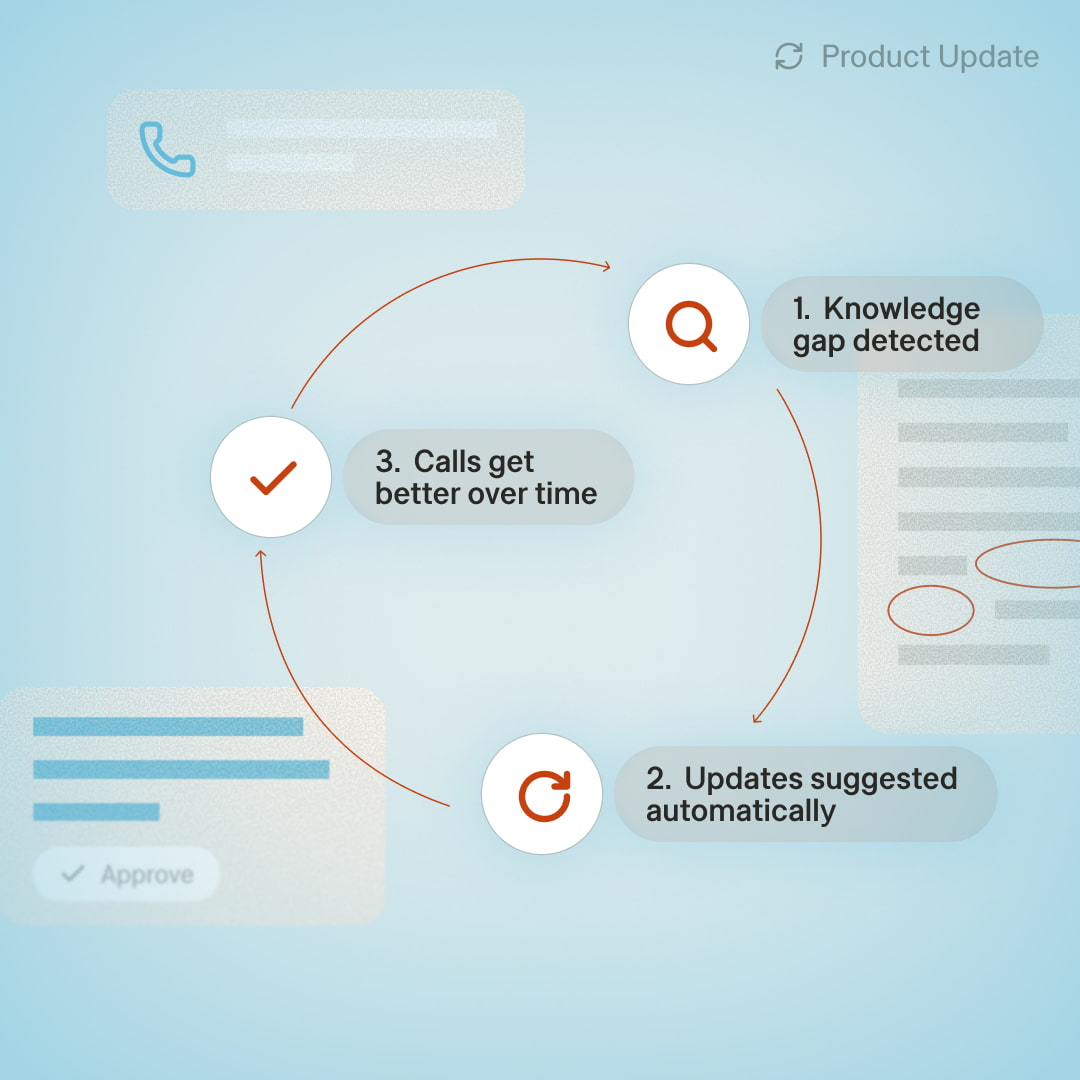
Analysis feeds into pattern recognition systems that identify actionable insights. Conversation intelligence transforms raw conversations into actionable insights, helping sales teams uncover deal risks, highlight winning behaviors and coach with precision.
For customer service applications, voice transcription and analysis can uncover customer trends and help you make data-driven improvements to your customer service quality at an aggregate level.
Systems deliver insights through two distinct models with different capabilities and infrastructure requirements.
Real-time capabilities listen to live customer conversations and provides agents with immediate, contextual support directly on their screens. Real-time capabilities include live coaching cues, dynamic sentiment monitoring, knowledge base suggestions and next-best-action recommendations.
These capabilities often use streaming architectures for low-latency performance, but can also be delivered through batch or hybrid approaches. They must maintain accuracy under production load while handling background noise and overlapping speakers.
Post-call analytics perform full trend analysis, detailed coaching insights, Customer Relationship Management (CRM) integration and compliance scoring after conversations complete, requiring less infrastructure but providing insights only retrospectively.
Effective systems connect conversation intelligence to broader sales execution strategy through deliberate integration at multiple touchpoints. Integration capabilities include the following:
These integrations complete the AI call intelligence pipeline by embedding insights directly into business processes rather than creating separate systems requiring manual data transfer.
Successful implementation requires strategic planning and change management rather than simply purchasing software. Only organizations that reshape workflows and invest in people are seeing superior results.
Begin with specific business problems the technology should solve rather than exploring technology capabilities. Leading organizations prioritize business expertise over technical enthusiasm.
Identify measurable outcomes, such as reduced call handling time, improved first-call resolution, increased revenue opportunities identified, or increased customer satisfaction scores. Define what success looks like numerically. For example, "reduce average call handling time from 8 minutes to 6 minutes" rather than vague goals like "improve efficiency."
Document baseline metrics before implementation to measure actual impact. If your goal is to improve customer satisfaction, record your current Customer Satisfaction (CSAT) score. If you're focused on operational efficiency, document current call handling times, first-call resolution rates and QA hours spent on manual call review.
This approach ensures you have a clear before-and-after comparison to validate ROI and identify which specific improvements the system delivers for your organization.
Evaluate whether your data infrastructure can support AI workloads before committing to vendors. AI-ready data and AI agents have emerged as two key factors in technology maturity, underscoring the importance of foundational data infrastructure for success.
Assess your call recording quality and consistency to determine whether recordings capture clear audio without excessive background noise and review your storage systems and retention policies to ensure you can maintain the historical data AI systems learn from.
You should also examine your historical data accessibility to determine if past recordings are easily retrievable and identify integration points with your existing telephony infrastructure and CRM systems.
This assessment is important because data quality and integration issues represent the primary failure point for AI implementations. Infrastructure gaps discovered after vendor selection create costly delays and may require expensive system replacements that weren't in your original budget. As a result, this assessment should occur during the vendor evaluation phase, not after selection.
Most employees prefer peer-to-peer learning. Leverage this finding by identifying AI champions within your organization. Select early adopters from your sales or customer service teams who demonstrate enthusiasm for technology and peer influence. These champions will test the system, provide feedback and eventually train colleagues.
Once you've identified your champions, start with a focused pilot program targeting a specific use case, such as automating quality scoring for your customer service team before expanding to sales or other functions. This focused approach validates your assumptions, refines your implementation and demonstrates ROI before full-scale deployment.
A successful pilot with measurable results makes broader adoption easier than asking your entire organization to adopt unproven technology.
Many frontline employees do not receive sufficient guidance from leadership on how to use AI effectively. Your team needs to understand why you're implementing this system and how it benefits them personally, not just how it benefits the business.
Position the implementation as augmenting their capabilities rather than replacing them and emphasize how the technology frees them from repetitive work to focus on complex customer relationships and relationship building.
AI is automating routine inquiries, freeing agents from repetitive tasks. Instead of answering the same questions all day, they now have time to build customer relationships and handle complex issues requiring human judgment.
This positions the change as expanding their role rather than threatening it, improving adoption and aligning with evidence showing that organizations achieving ROI treat AI as enhancing human performance rather than eliminating it.
Training should focus on interaction capabilities rather than mere system operation. This emphasizes hands-on learning that teaches your team how to refine AI understanding of your business-specific context, implement continuous improvement through active engagement and apply insights in real-world situations. Effective utilization requires the development of "fusion skills" through hands-on practice.
Hands-on workshops where team members use the system to solve real business problems they encounter daily are particularly effective.
You can pair team members to mentor one another and demonstrate success with real business challenges rather than covering every system feature in classroom-style settings.
Focus on business outcome measurement rather than technology utilization metrics. Organizations that maintain a pragmatic, business-first approach achieve more substantial ROI. Measure the specific objectives you defined in Step 1.
Expand from your pilot to broader deployment based on demonstrated impact on business objectives rather than arbitrary timelines. If your pilot delivered measurable results aligned with specific business objectives — such as reduced call handling time, improved first-call resolution, or increased revenue opportunities identified — expansion decisions become straightforward.
If results were mixed, iterate on your implementation approach before scaling, focusing particularly on workflow redesign and change management rather than assuming the technology itself requires adjustment.
The analytical value of call intelligence shifts depending on what's at stake in a given call type. These are the verticals where the technology has the most direct operational impact.
Every intake call carries dual weight — it is both a business development moment and a potential professional responsibility event. Call intelligence flags calls where intake questions were skipped or conflict check language was not delivered, creating an audit trail that protects the firm. Sentiment detection identifies distressed callers who received impersonal handling, which is one of the most common reasons prospective clients choose a competitor. Aggregate pattern analysis across intake calls surfaces which practice areas generate the most volume and where qualification rates drop — informing both staffing and marketing decisions.
In home services, call speed and urgency classification determine whether you win or lose a job. Call intelligence identifies where dispatchers are failing to triage emergency versus routine calls correctly, and flags calls where service area verification was skipped — a common source of technician dispatch errors. Sentiment data on after-hours calls reveals how callers respond to hold times and callback promises, directly informing decisions about whether to extend live coverage or add AI handling to specific time windows.
For agencies and consultancies, new business calls are high-stakes and inconsistently handled across team members. Call intelligence makes qualification consistency measurable — tracking whether discovery questions were asked and whether next steps were defined before the call ended. Aggregate data across business development calls, and identify which qualification frameworks convert to proposals and which do not.
AI call intelligence systems transform how businesses understand and improve customer interactions, moving from analyzing a small sample of calls to extracting insights from every conversation.
Successfully capturing this value requires strategic workflow redesign, organizational alignment and sustained commitment to continuous improvement.
Smith.ai is an AI workforce for the front office — combining the AI Receptionist and Virtual Receptionist into one system that delivers conversation intelligence benefits while maintaining the relationship quality that drives customer satisfaction. Both services handle calls with consistent protocols, capture structured data on every interaction and integrate directly with your CRM — so every conversation becomes a source of operational insight.

Maddy Martin is Smith.ai's SVP of Growth. Over the last 15 years, Maddy has built her expertise and reputation in small-business communications, lead conversion, email marketing, partnerships, and SEO.


.webp)