Take the faster path to growth. Get Smith.ai today.
Affordable plans for every budget.


For years, the conversation about law firm calls has centered on one question: did anyone pick up? Smith.ai's Legal Intake Report looks at what happens next, across 3.2 million answered calls to 4,210 US law firms.
When Forbes covered the report, the headline lesson was one every firm already knows: every missed call is a missed customer.
This series picks up where that lesson ends. Across five posts, we'll break the 58-page report into findings and fixes for what happens once the call is answered.
You're reading Part I of Inside the Legal Intake Report.
Smith.ai runs intake for firms across several practice areas (personal injury, family law, criminal defense, immigration, employment, estate planning, and many more).
A single firm can only measure intake performance against its own calls. We can compare the intake performance of thousands of our clients side by side, so we can see what the best-converting firms do versus everyone else. That comparison is the point of the report: a public benchmark for legal intake, so any firm can see where it stands and what to change.
The headline finding is encouraging. The best-converting firms aren't more gifted at intake. They're more thorough. They decide what their intake process should produce, use a few readily available tools to carry it out, and make sure it happens the same way on every call. Every firm, including yours, can do the same.
A quick note on scope: the report covers new-business calls only, and it measures intake connection rates, not conversion rates once qualified leads connect with the firm.
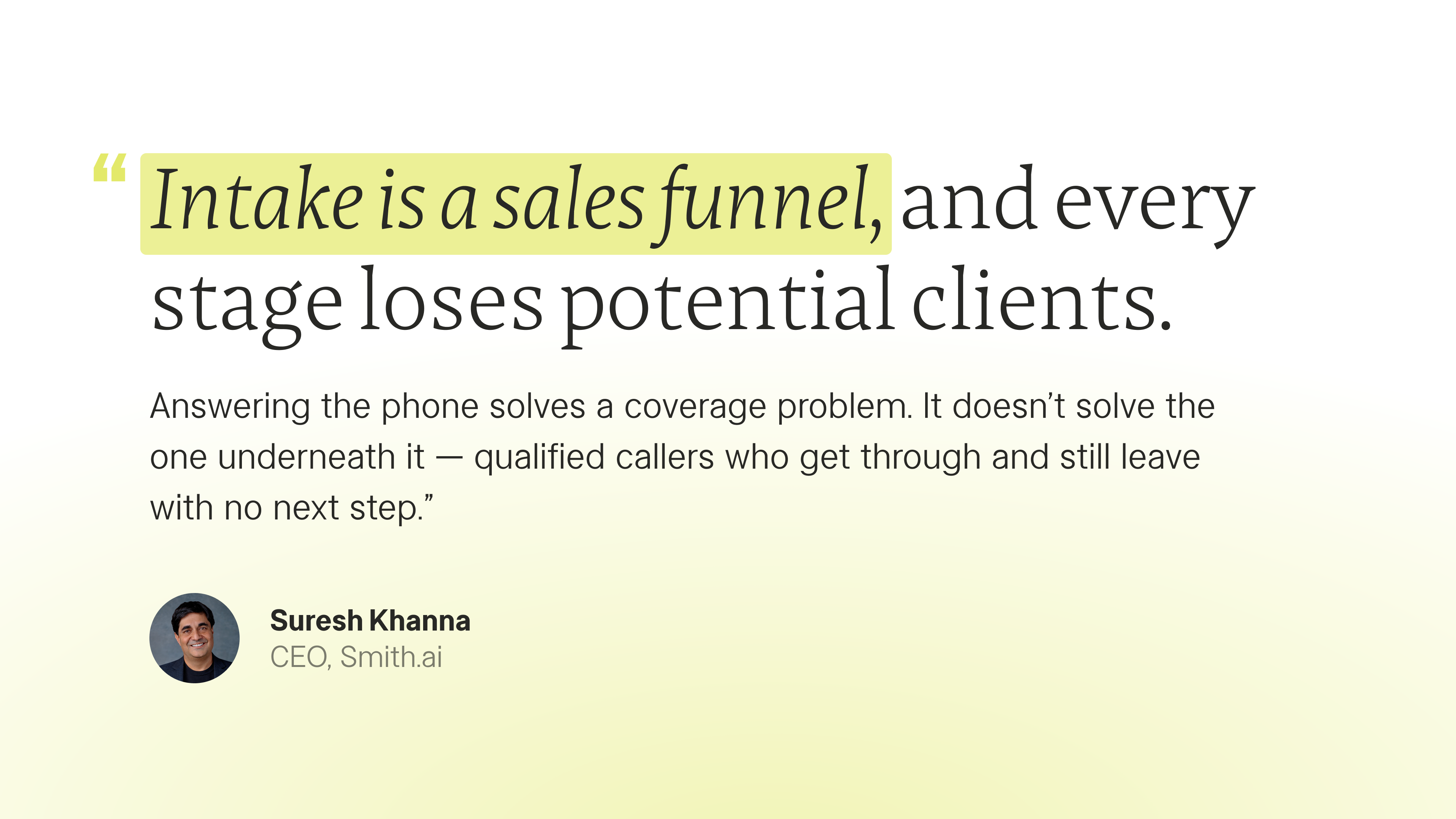
Lawyers call it intake, but it behaves like any other sales funnel. Leads arrive. Some qualify. Then they're either offered a next step or they aren't.
As Suresh told Forbes, lawyers run "one of the hardest, most valuable funnels in small business." It's hard because running a sales process is a different skill from practicing law, which is why plenty of firms that do excellent legal work underperform here. It's valuable because every caller in that funnel is a lead the firm is already paying to generate.
The report follows each call through four stages of the intake funnel:
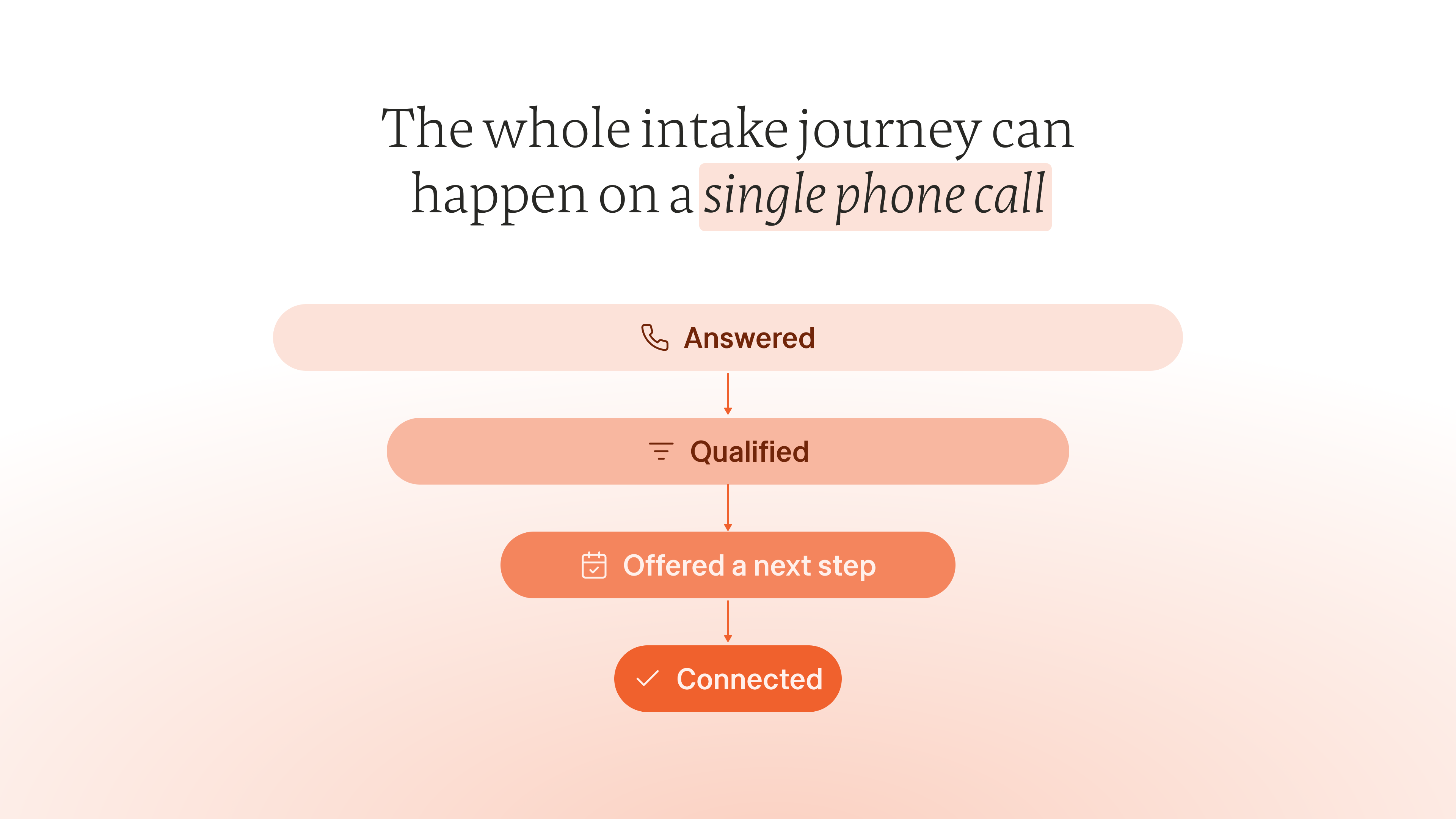
If your firm already outsources call answering, the first two stages are likely working. The rest of this series is about the last two, which is where most firms lose qualified leads.
The most common explanation for a weak intake number is "our leads are junk." The data tells a different story.
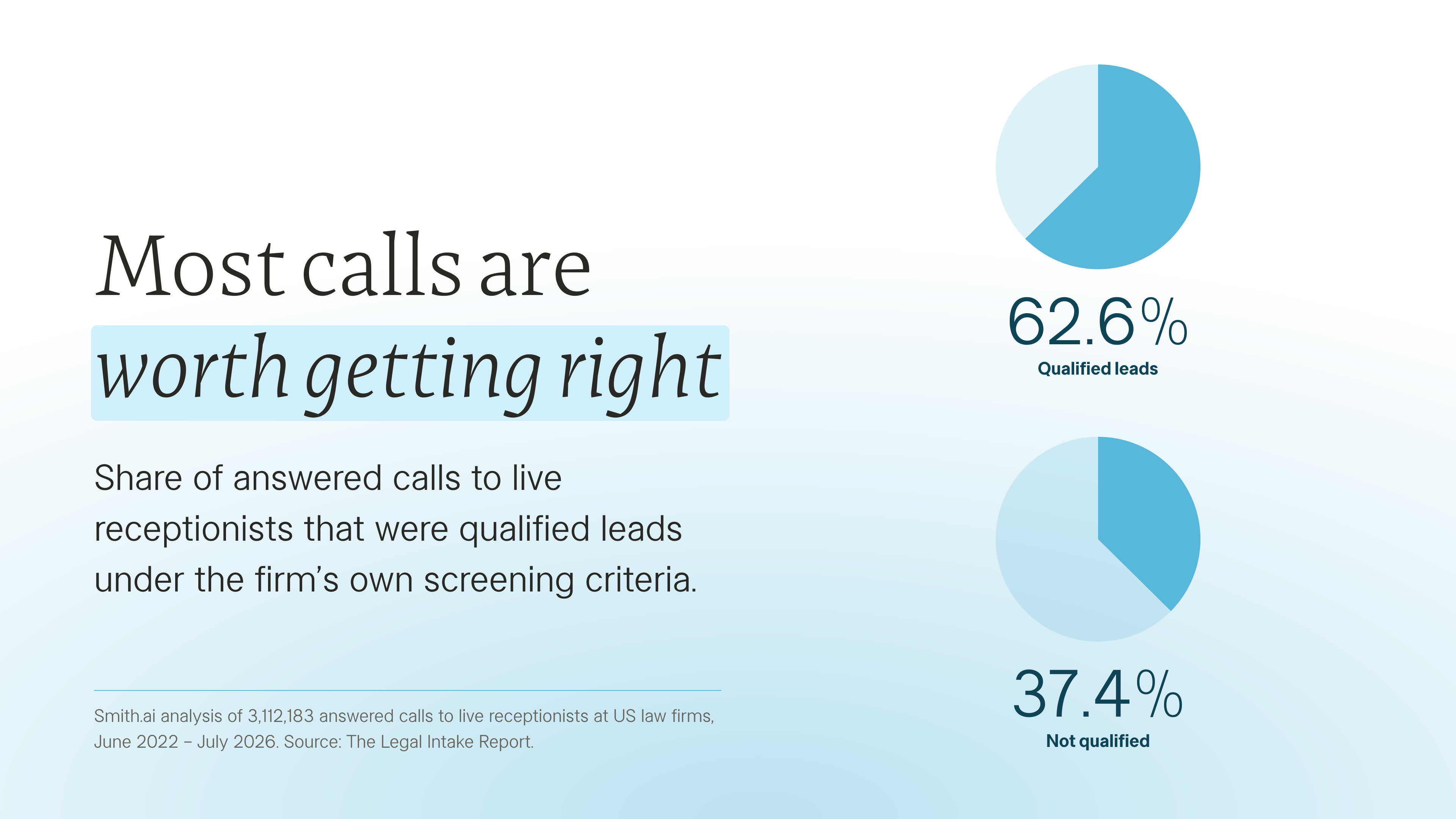
Under most firms' screening criteria, 62.6% of answered calls to live receptionists were qualified leads. That's 1.95 million qualified callers since June 2022, and the share held steady every year.
What’s more, those leads are good at any time of day. After-hours callers qualify at nearly the same rate as daytime callers: 59.5%, against 63.7% during business hours.
The people calling law firms have real legal problems and are ready to talk to a lawyer. When they don't become clients, the cause usually lies in what happens on the call after they’ve been qualified.
The median call with a qualified lead runs 6.0 minutes. In that time, a receptionist works through about 16 steps. Roughly six and a half of those screen the matter: the location, any other parties, key dates, what's already been filed. The rest are contact details and internal workflow the caller never hears.
Those six minutes are the whole window. Calling a lead back later is hard, so how a lead is handled on the first call largely decides whether they ever become a client.
The firms that win these callers aren't doing anything elaborate. They end the call by offering the qualified caller a next step before anyone hangs up.
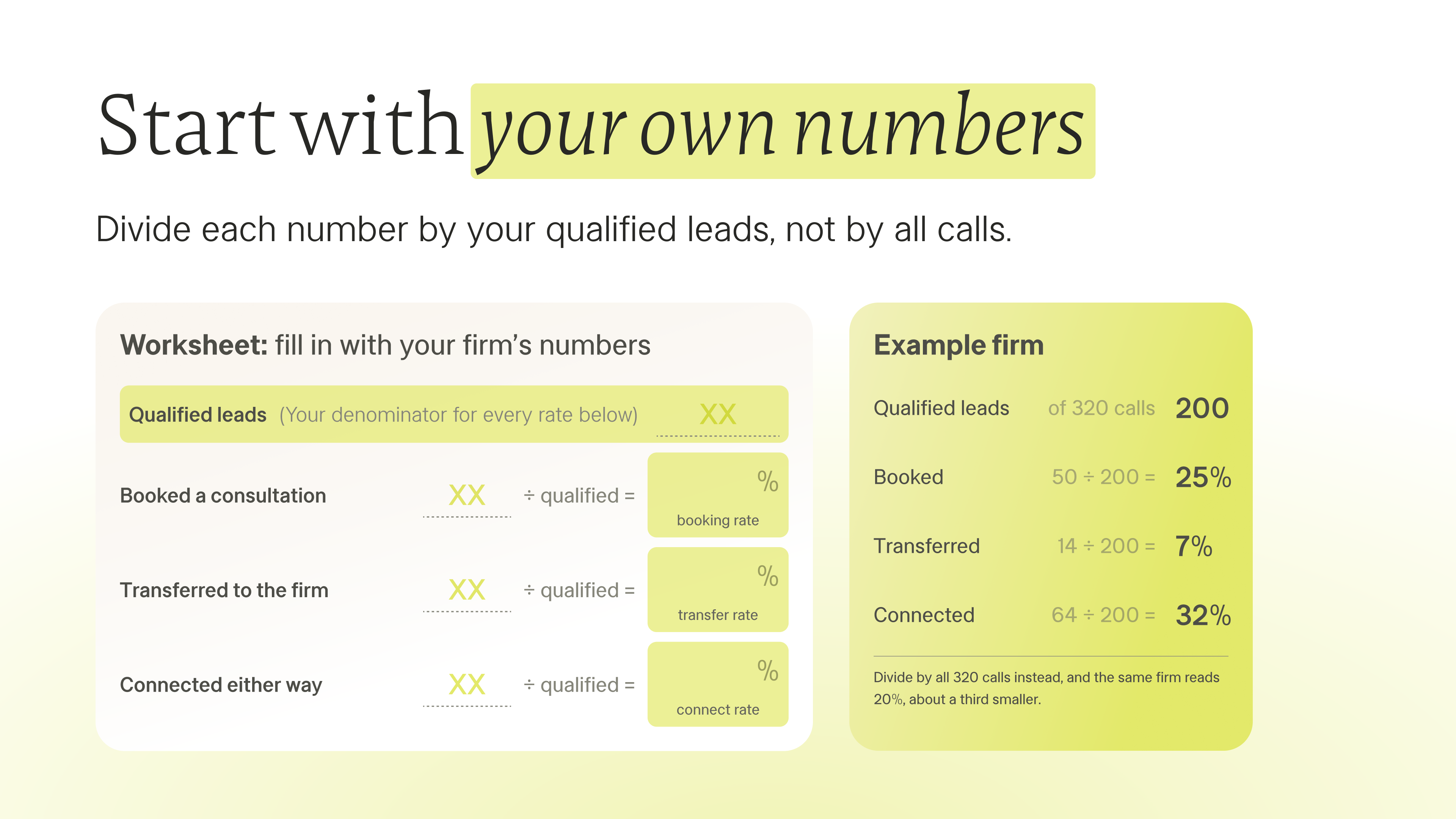
Pull four numbers from your firm’s intake records over the last month:
Then use the worksheet below:
In the next post, we’ll show you the benchmark to compare your numbers against.
Over the next few weeks, we'll publish more critical findings from the report, each built around a key stat from the report and the intake improvement steps that go with it:
Get the full Legal Intake Report to dive into every finding, the breakdown by practice area, and the full methodology.
Want help finding where qualified callers slip away at your firm? Book a 15-minute intake review with our team.
Next in the series: Legal intake conversion rate: the benchmark, and the habit that beats it.

Danielle Whyte is a marketing coordinator at Smith.ai.


