Take the faster path to growth. Get Smith.ai today.
Affordable plans for every budget.


Smith.ai's Virtual Receptionists and AI Receptionist can now send retainer agreements for e-signature during the intake call, closing the gap between a qualified lead and a signed retainer.
Most contingency-fee firms have a process gap between the moment a caller is qualified as a potential new client and the moment a retainer agreement is actually signed. Especially with motor vehicle accident (MVA) and SSI cases, callers are usually shopping more than one firm, and whichever law firm gets the retainer out first has the edge in winning the client. If your initial intake process ends with a fuzzy statement like "someone will follow up," potential clients are slipping away to competitors who are better at “locking them in.”
Closing the gap: Send the retainer during the first intake call
Sending retainer agreements is now available for Smith.ai's Virtual Receptionists and AI Receptionist, closing that gap directly and stopping your potential new client's search for an attorney.
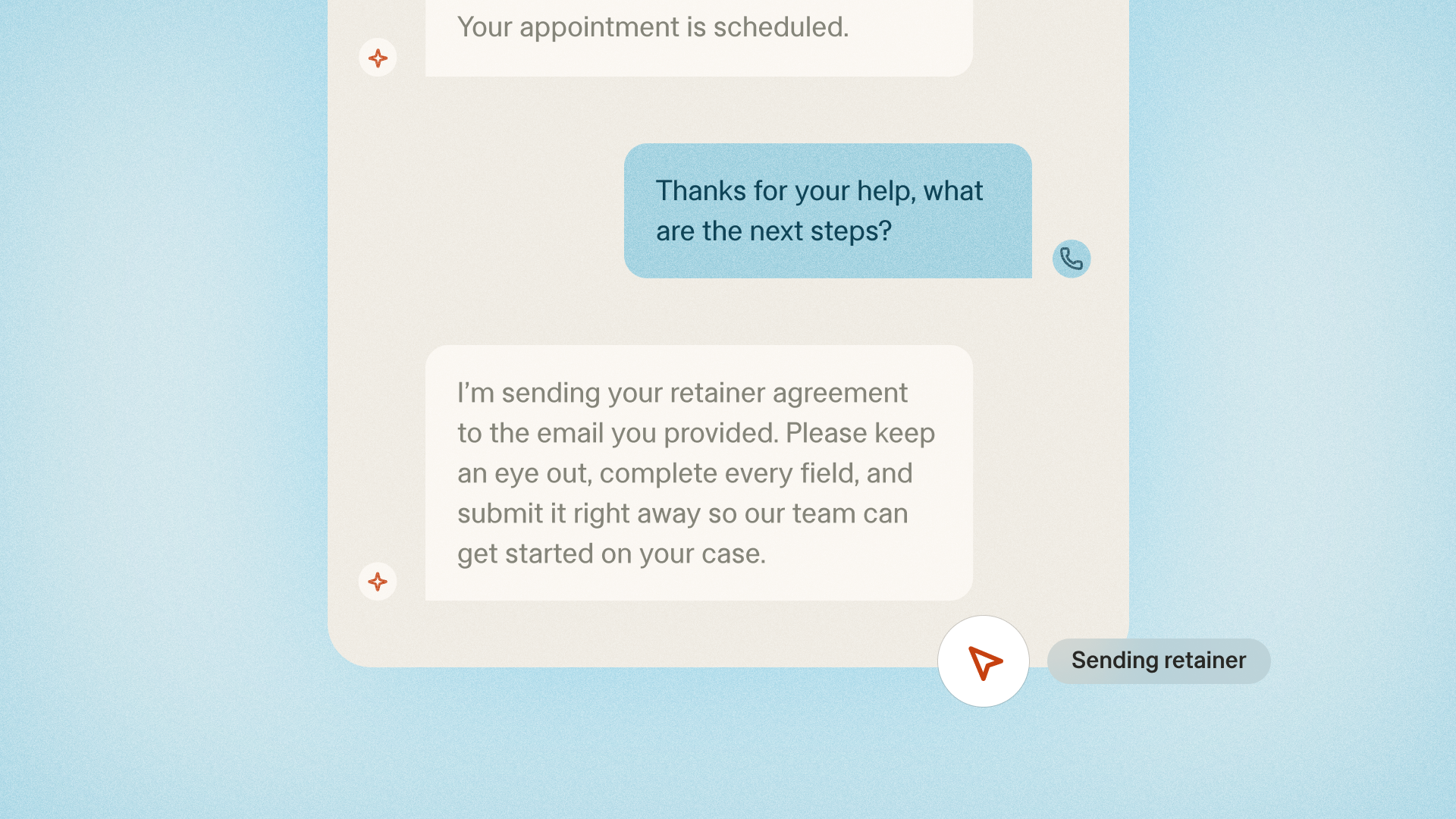
When your receptionist qualifies a caller, the retainer agreement automatically goes out for signature before the call ends, sent via the e-sign software your firm already uses.
The result is an intake process that gets you closer to a signed retainer. Instead of ending the call with a manual task for your team to pick up, Smith.ai carries intake all the way through to a retainer in hand.
Smith.ai receptionists can send retainers through the software you're already using, including MyCase, Lawmatics, Filevine, Vinesign, Law Ruler, Docusign, Dropbox Sign, plus Zapier and n8n for automating workflows across 7,000+ additional integrations.
This isn't about changing your intake process. It's about aligning your receptionists' workflow with how you actually convert leads. For MVA, SSI, and other contingency-fee cases, Smith.ai handles the initial intake end-to-end: screening the caller, qualifying them, booking a consultation, and sending a retainer, all within the first call.
Retainer sending is available now on all paid Virtual Receptionists and AI Receptionist paid plans. Connect with our sales team to learn more. For existing clients wishing to get your e-sign software connected, email support@smith.ai.

Mei Loo is a Product Marketing Manager at Smith.ai.


